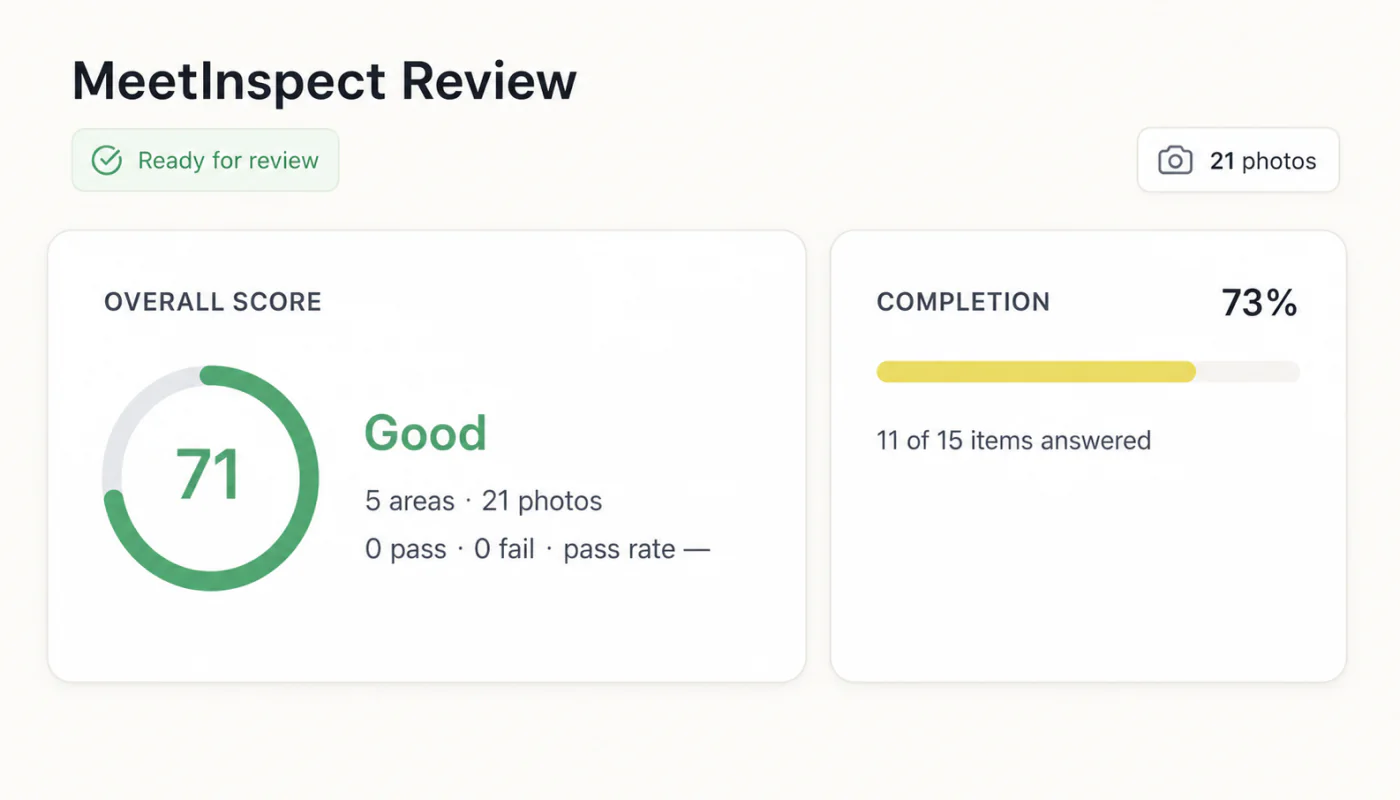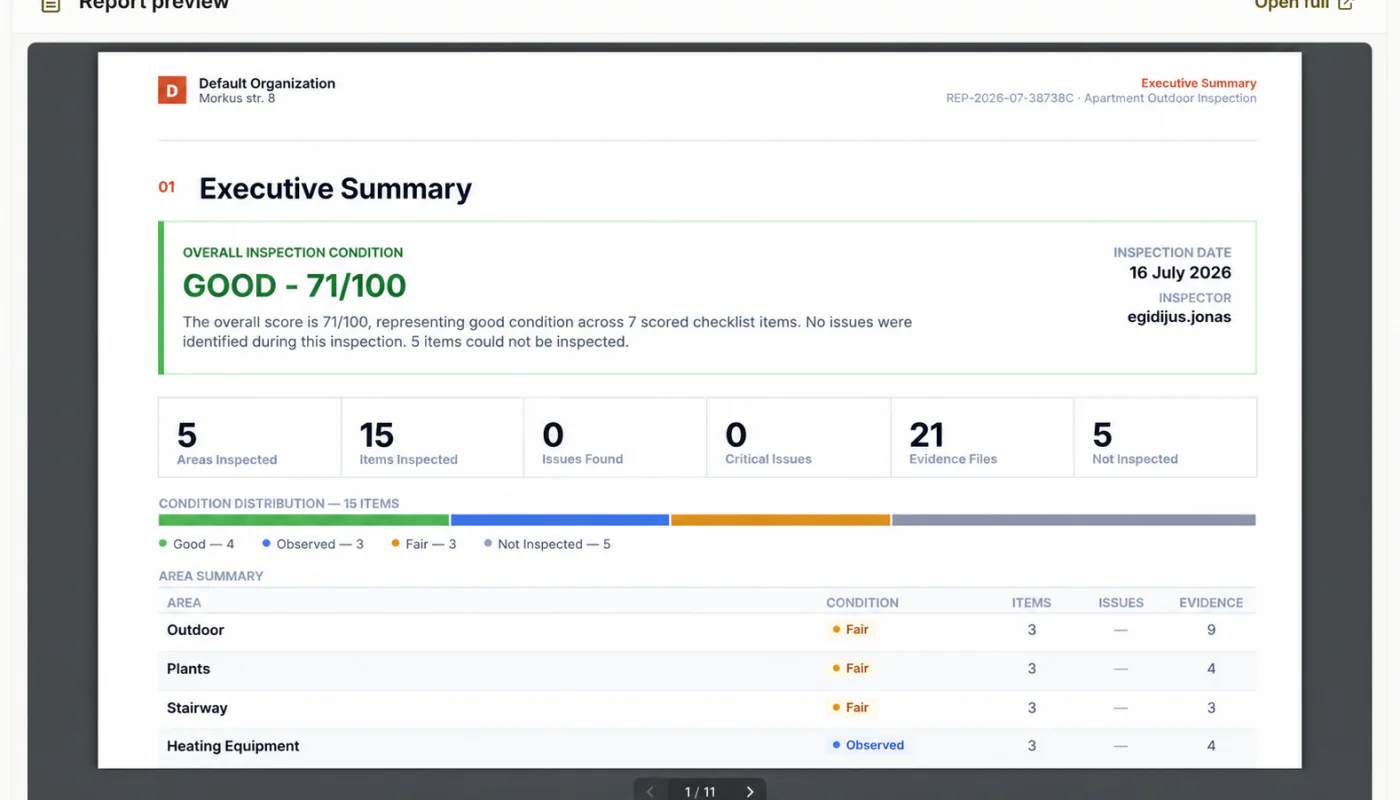
The report is the client-facing expression of the inspection record. It should be easy to navigate, clear about outcomes and specific about the evidence behind them.
01
Design for the reader
A property manager, contractor and tenant may read the same report for different reasons. Lead with the inspection context and summary, then let detailed evidence follow in a predictable structure.
02
Keep traceability intact
Every note, image, signature and action in the report should come from the confirmed inspection record. Manual copy-and-paste creates avoidable gaps.
- Identify property and inspection type
- Show dates and responsible parties
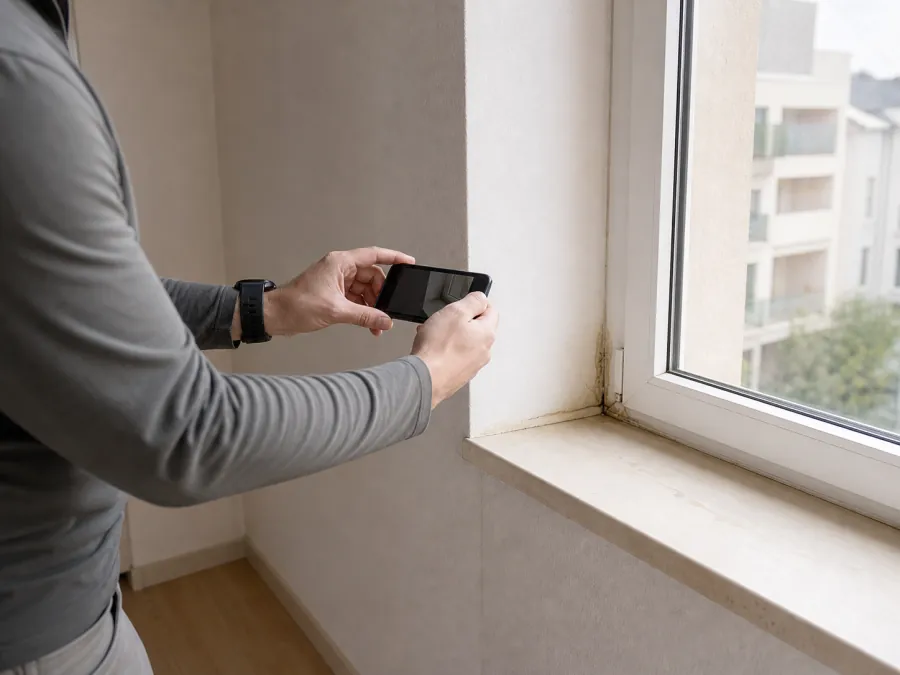
- Keep evidence beside the related outcome
03
Separate reporting from live operations
The PDF communicates the confirmed record. Assignments, internal statuses and ongoing actions should remain in the workspace where teams can update them safely.
04
The report should render the record, not restate it
Where a report is written separately from the inspection, two versions of the truth exist and they drift. The report becomes the artefact everyone reads while the underlying record quietly stops matching it.
Generating the document from the completed record removes that possibility entirely. It also means report quality is mostly decided in the template: if a report reads poorly, the cause is usually section ordering or item labelling.
- Generate from the record rather than rewriting it
- Check ordering and labelling in the template first
- Test with a realistic number of photographs
- Read it as somebody who was not at the property
05
Writing for a reader who was not there
Internal shorthand that is obvious to an inspector is frequently opaque to a client, a contractor or a tribunal. Abbreviations, room nicknames and assumed context all reduce the evidential value of an otherwise complete record.
The test is whether somebody with no knowledge of the property could act on each finding without asking a question. Where they could not, the finding needs more detail rather than more words.