Inspection status
Review planned, in-progress and completed inspections across the active workspace.
- Due work
- Assigned inspector
- Completion state
MeetInspect keeps fieldwork moving even when the signal stops

Analytics
MeetInspect brings planning, completion and reporting activity into the workspace so operations teams can identify what is moving and what still needs attention.
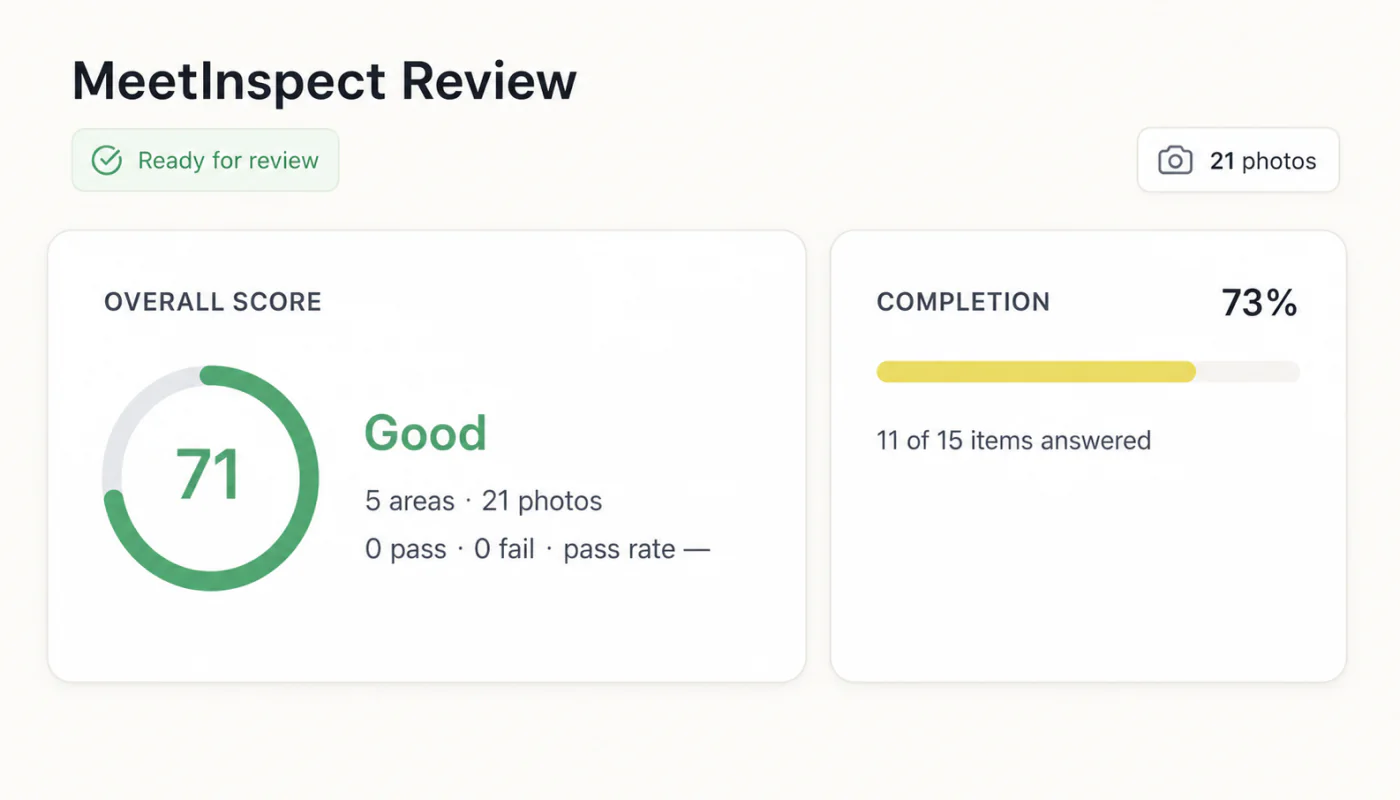
What it covers
Use workspace views to understand workload and follow-up, then open the original inspection when a number needs context.
Review planned, in-progress and completed inspections across the active workspace.
Identify records that need review, missing information or follow-up before final reporting.
Keep completed inspection records and generated reports connected to the relevant property and workflow.
In practice
Narrow activity by the workspace information available to your team, such as property, branch or assignment.
Open the inspection behind the status to review its answers, evidence and actions.
Workspace roles determine who can configure operations, perform inspections or review information.
In depth
Before any analysis of what inspections found, an organisation needs to know which ones happened. Scheduled-versus-completed, overdue work and unstarted assignments are unglamorous measures, but they describe whether the programme is operating at all — and they are frequently the measures nobody can produce.
Completion data is also the honest test of whether a workflow is usable. A checklist that is consistently completed late, or abandoned partway, is telling you something about its design rather than about the people using it.
A single finding is a maintenance task. The same finding appearing across twenty properties is a procurement decision, a specification problem or a supplier issue — a different category of thing entirely, and invisible unless findings are recorded consistently enough to aggregate.
This is where structured capture pays back. Observations recorded as free text can be read one at a time but not counted; the pattern only emerges when the same defect is recorded the same way across the portfolio.
Two inspectors covering comparable properties should produce broadly comparable findings. Where they do not, the cause is usually the template rather than the people: a question ambiguous enough to be read two ways will be read two ways, consistently and forever.
Treating divergence as a data-quality signal is more productive than treating it as a performance issue. It points at the specific questions that need rewriting, which is a fixable problem.
Next step
Explore the related guidance, or speak with MeetInspect about the inspection your team needs to run.
Field-first inspection software for consistent evidence, offline capture and professional reports.

© 2026 MeetInspect. All rights reserved.