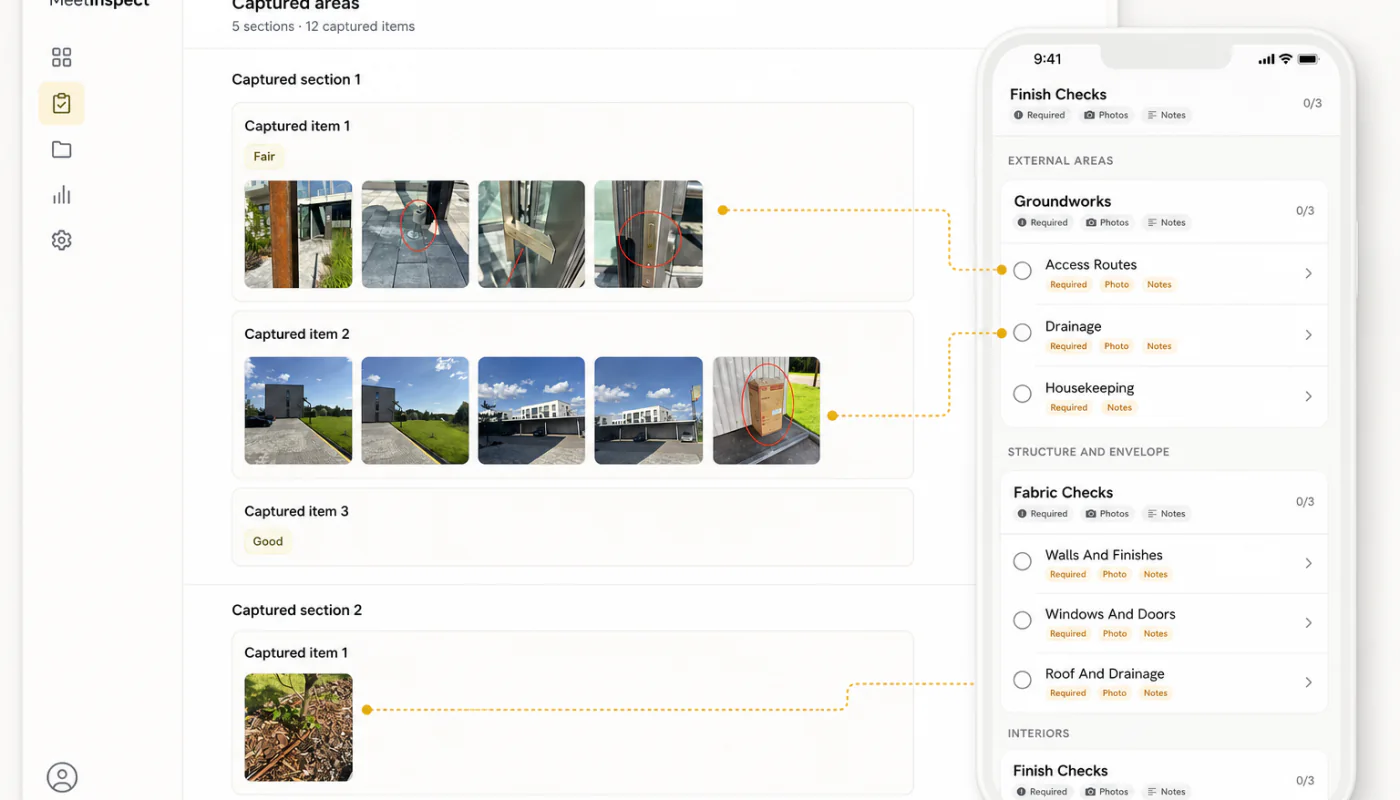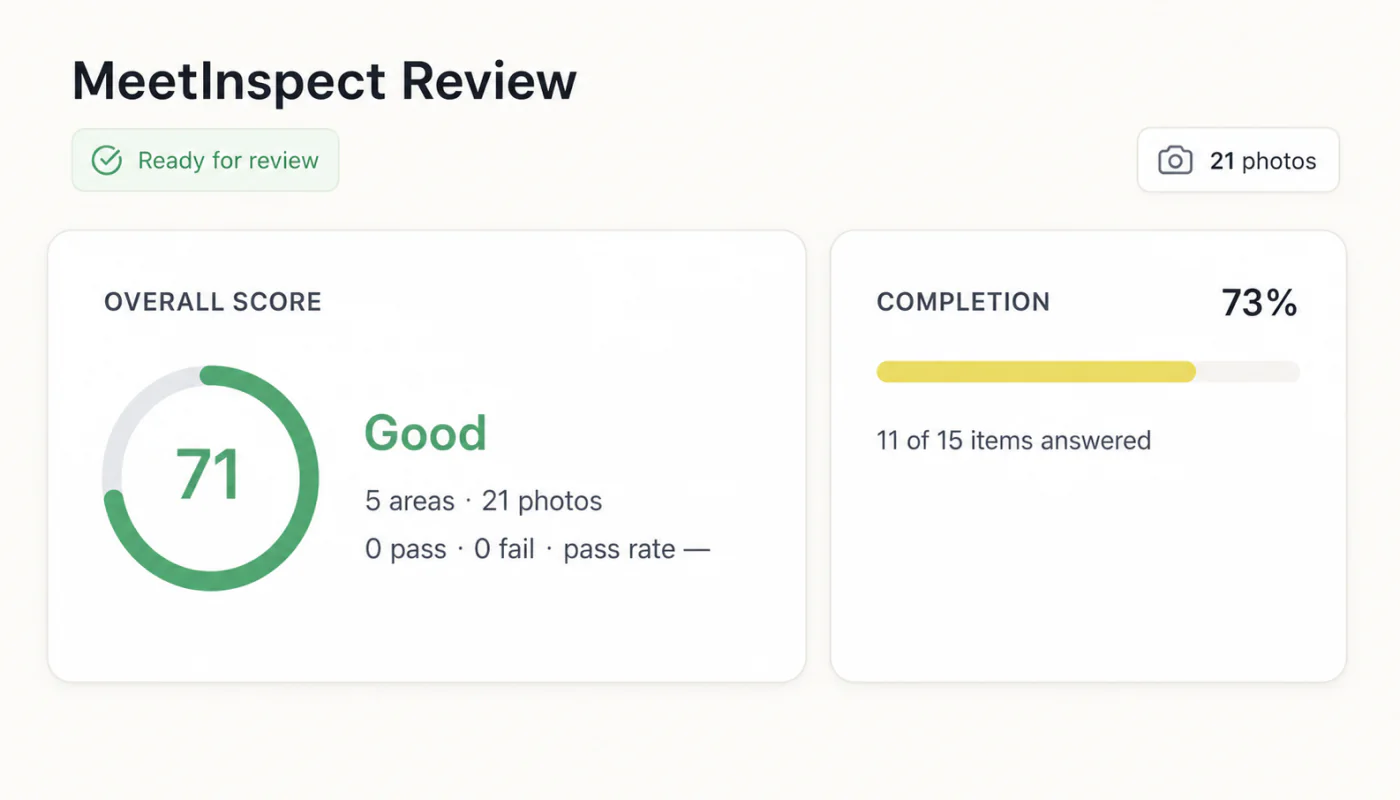
Inspection volume is easy to count. Inspection quality needs a clearer definition because a completed visit can still contain missing evidence, inconsistent outcomes or unresolved actions.
01
Measure the record, not individual effort
Choose indicators that describe the evidence your process produced. This keeps coaching objective and makes comparisons between properties more useful.
- Required evidence completion
- Review corrections before approval
- Time from visit to confirmed report
- Open actions resolved on schedule
02
Compare like with like
A short room-quality check and a full stock condition survey should not share the same benchmark. Segment results by inspection type, property group and workflow.
03
Use trends to improve templates
Recurring missing evidence often points to template or process design, not individual performance. Use review data to simplify questions and clarify requirements.
04
Completion before findings
Before analysing what inspections found, establish which ones happened. Scheduled against completed, overdue work and unstarted assignments describe whether the programme operates at all — and they are frequently the numbers nobody can produce.
Completion data is also the honest test of workflow design. A checklist consistently completed late, or abandoned partway, is telling you something about itself rather than about the people using it.
- Track scheduled against completed, not just completed
- Watch which questions are most often left incomplete
- Measure how long findings stay open
- Compare findings between inspectors for drift
05
Divergence is usually a template signal
Two inspectors covering comparable properties should produce broadly comparable findings. Where they do not, the cause is far more often an ambiguous question than a performance difference.
Treating divergence as a data-quality signal points at the specific wording that needs rewriting, which is fixable. Treating it as a performance issue produces defensiveness and no improvement.