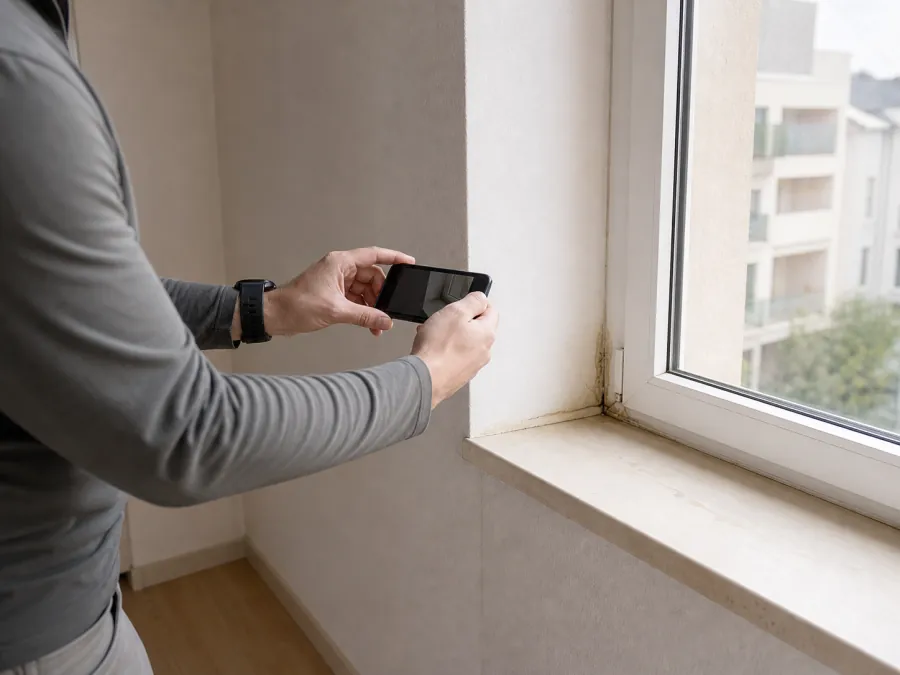
The challenge
Move-in and move-out inspections often vary between properties and inspectors. Notes can be inconsistent, photos may sit outside the checklist and the final report takes extra time to assemble.
The team needs a repeatable way to document every room while keeping property-specific evidence easy to review.
The approach
Start with a controlled template for the property and inspection type. Define the required room checks, outcomes, notes and photo evidence before the visit begins.
The inspector follows the same guided sequence on site, including when the signal is unavailable. After reconnecting, the record synchronises into the shared workspace for review.
Missing items are resolved before signatures and reporting, so the final PDF is produced from one complete inspection record.
The result
The workflow gives residential teams a more consistent record across the portfolio and reduces the manual work needed to match notes and photos to the final report.
Every visit keeps the property, evidence, actions, signatures and report connected from start to finish.
Where residential records usually break down
The failure is rarely a missing inspection — it is an inspection that cannot answer the question later asked of it. Deposit disputes turn on small, unglamorous details: a scuffed skirting board, a stained carpet edge, a chip on a worktop. These are present at move-in and almost never written down, because nobody expects to argue about them.
The second failure is drift between inspectors. Two people documenting the same property to different standards produce records that cannot be compared, which removes the ability to see whether a property is deteriorating or simply being described differently.
- Record condition for items nobody expects to dispute
- Use one vocabulary across every inspector
- Capture meter readings and serials as text, not only photographs
- Take the tenant signature at the property, against the record shown
What the guided sequence changes
A controlled template removes the decision about what to record from the property, where time pressure is highest. The inspector follows the same order every visit, which makes the fourth inspection of the day as complete as the first.
Because evidence is attached to the question that required it at the moment of capture, the office no longer spends time matching photographs to rooms. That reconciliation work is where most of the post-visit hour disappears.
Periodic visits and the value of comparability
A mid-tenancy inspection that asks the same questions as the last one shows trajectory rather than condition: whether damp is spreading, whether a reported repair happened, whether the property is being maintained.
That only works while the template stays stable. Changing it between visits produces two records that cannot be read against each other, which is why amendments are worth batching rather than applying continuously.
Common questions
- What makes a move-in record hold up in a deposit dispute?
- Specificity and consistent coverage. The record needs condition for every item, including the ones nobody expects to argue about, with photographs attached to what they document and a signature taken at the property against the record the tenant actually saw.
- How do you stop inspectors recording to different standards?
- By fixing the structure rather than briefing individuals. A template that defines the rooms, the questions and the required evidence produces comparable records regardless of who completes it.
- Can a residential inspection be completed without a signal?
- MeetInspect includes offline inspection support, so the visit continues where connectivity is unavailable or unreliable and synchronises once the device reconnects — relevant in basements, conversions and rural properties.